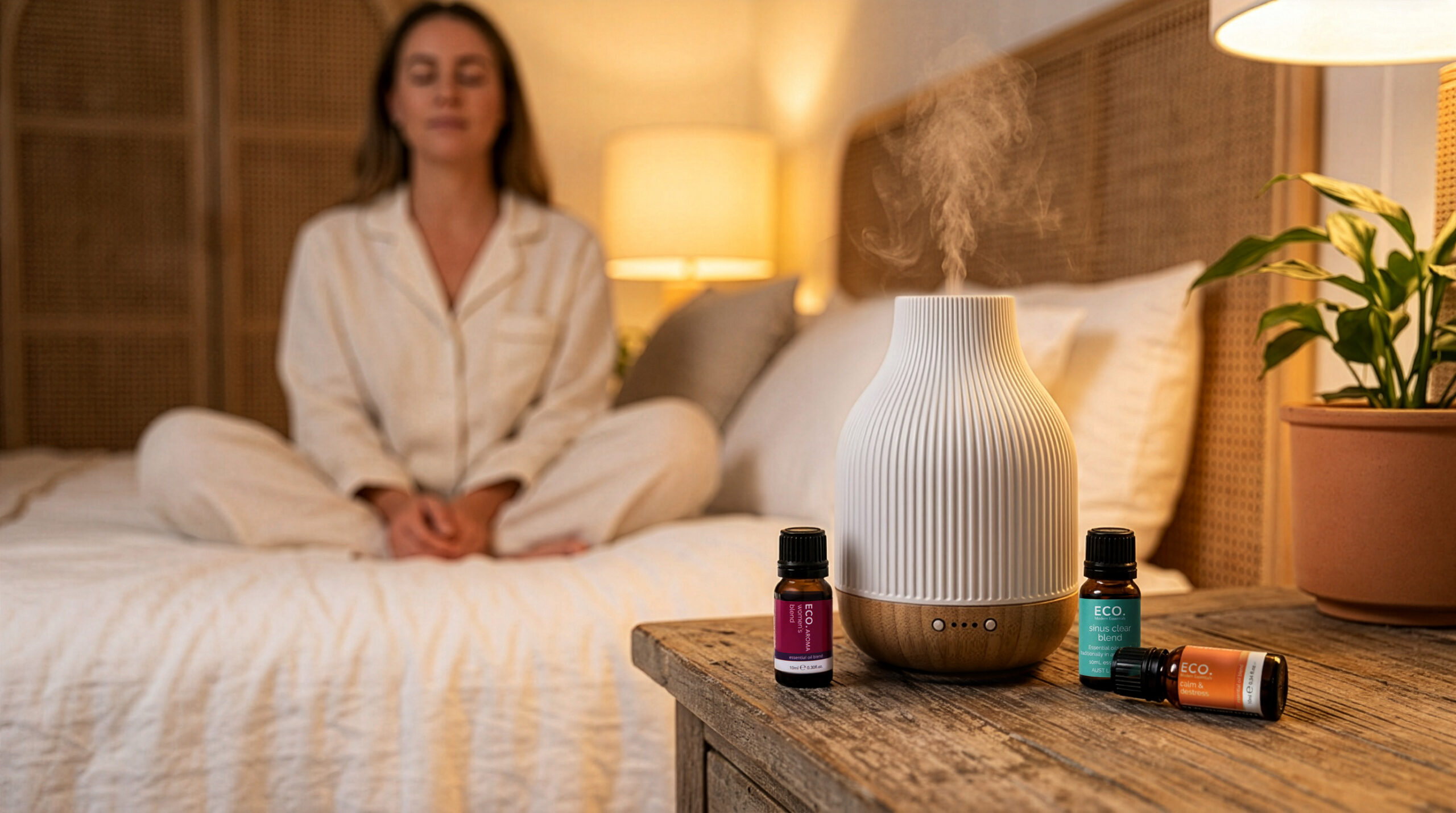

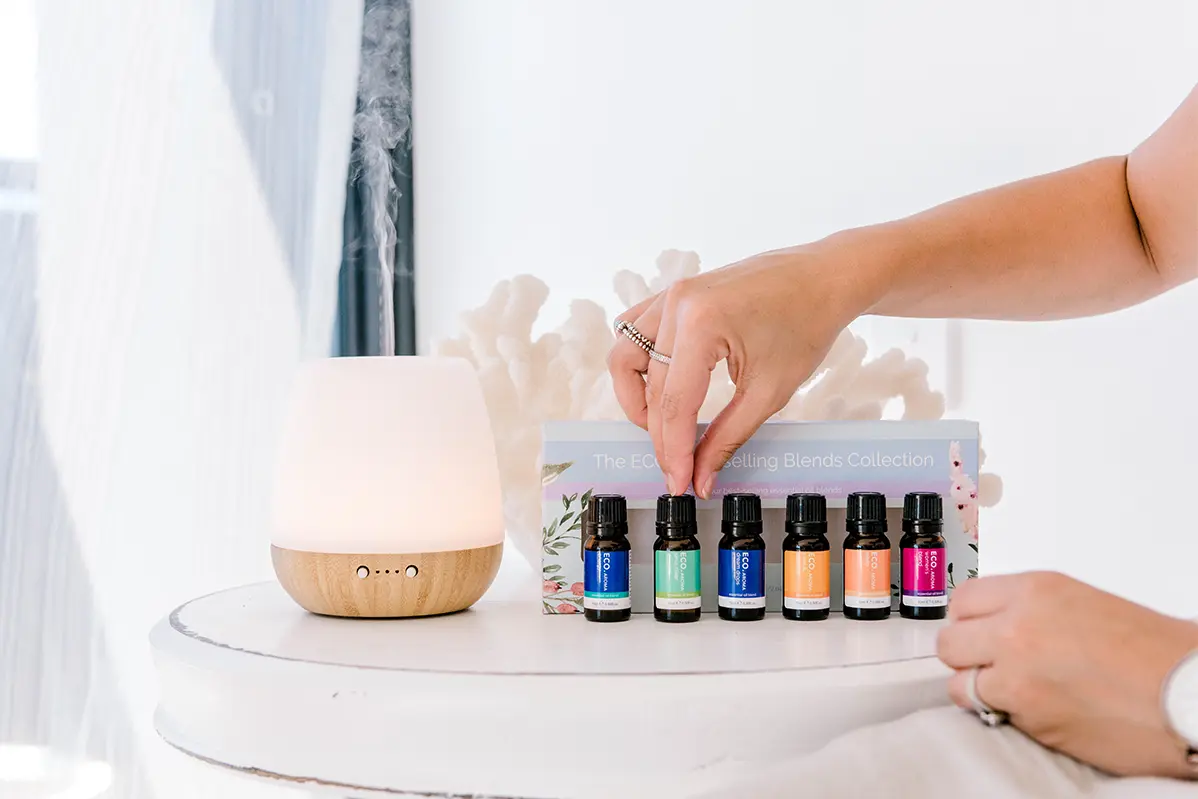
Aromatherapy is often presented as either a miracle fix or a wellness cliché. In reality, it sits somewhere in the middle. Used well, it can help make a space feel calmer, support a wind-down routine, and turn everyday moments into something more intentional. Used badly, it becomes expensive fragrance with inflated claims.
This guide is a practical look at how aromatherapy actually works, where it may be useful, and what to pay attention to if you are choosing oils or diffusers for your home.
What aromatherapy actually is
Aromatherapy is the use of plant-derived aromatic oils to influence mood, atmosphere, and routine. In everyday use, that usually means essential oils in a diffuser, a bath, a shower, or a diluted topical blend. The goal is not to “cure” life. It is usually to create a more supportive environment for rest, focus, or reset.
How it works in real life
Scent has a direct relationship with memory and emotion, which is why certain smells can feel grounding, energising, or comforting almost immediately. That does not mean every oil does everything the label claims. It means scent can be a useful tool when it is matched to the moment properly.
- Lavender is often used in evening routines because it feels softer and more settling.
- Peppermint is commonly used when people want something sharper or more invigorating.
- Eucalyptus is often chosen for shower steam, winter air, or a cleaner-feeling room.
- Citrus oils can make a space feel lighter, fresher, and more awake.
What aromatherapy is good for
The best use of aromatherapy is usually simple. It helps build atmosphere and ritual. It can make a bedtime routine feel more consistent, a desk feel less stale, or a home feel more considered. It works best as part of a broader routine, not as a replacement for one.
What to look for when buying oils
- Clear ingredient naming rather than vague fragrance language
- Brand transparency about sourcing and dilution
- Packaging that protects the oil properly, usually dark glass
- A scent profile that matches how you actually want to use it
If you are choosing between cheap novelty oils and a smaller range from a more credible brand, the second option is usually the better buy.
Diffuser or no diffuser?
A diffuser is useful if you want scent to shape a whole room. If not, simpler options like shower steam, pillow sprays, or diluted roll-ons can be enough. Start with the use case, not the gadget.
A simple starting point
If you are new to aromatherapy, start with one evening oil, one fresh daytime oil, and a diffuser only if you know you will use it. Keep it practical. The goal is not to build a collection. The goal is to create a routine you actually return to.
Disclosure: This article may include affiliate links when products are added. Any recommendation should feel useful first, commercial second.
Want more like this?
We send a short note when there's something worth sharing. No spam, no daily pile-up.